Anxiety Treatment in Metro Detroit

If anxiety is disrupting your work, sleep, or relationships, you’re not alone—and you’ve got effective options in Metro Detroit.
You can choose evidence-based care like CBT, exposure therapy, or trauma-focused treatments, often paired with SSRIs or SNRIs, mindfulness, exercise, and sleep strategies.
You’ll want a licensed clinician who matches your goals and offers clear progress tracking, such as the GAD-7.
From local clinics like Open Door Counseling Center to telehealth and intensive programs, your following steps matter because…
Key Takeaways
- Evidence-based therapies available include CBT, exposure therapy, and trauma-focused options like EMDR for trauma-linked anxiety.
- First-line medications are SSRIs/SNRIs; avoid routine benzodiazepines, monitor outcomes (e.g., GAD-7), and adjust doses gradually.
- Integrative supports: aerobic exercise, diaphragmatic breathing, mindfulness, sleep hygiene, and, if indicated, omega-3 or L-theanine, with medication checks.
- Care settings include in-person, telehealth across Metro Detroit, and intensive outpatient/partial hospitalization for severe impairment.
- To find a clinician, verify licensure and anxiety specialization; try consultation calls and consider Open Door Counseling Center in Clinton Township.
Understanding Anxiety: Signs, Symptoms, and Everyday Impact
Even when life looks “fine” on the outside, anxiety can show up as a relentless alarm inside your body and mind. You might notice restlessness, irritability, muscle tension, stomach upset, headaches, or disrupted sleep.
Your thoughts can race, anticipate danger, or fixate on mistakes. Concentration slips. You may avoid people, places, or tasks to prevent discomfort, which shrinks your life and reinforces fear.
Clinically, anxiety involves heightened threat detection, increased autonomic arousal, and safety behaviors that maintain symptoms. Common presentations include generalized worry, social anxiety, panic sensations (rapid heartbeat, shortness of breath), and phobias.
In daily life, anxiety can strain communication, reduce patience with kids or partners, and erode confidence at work or school. You’re not “weak” or broken—your nervous system is overprotecting you.
With informed support, relief is possible.
Evidence-Based Therapies: CBT, Exposure, and Beyond
While anxiety can feel hardwired, research shows it’s highly treatable with structured, skills-based care. In Cognitive Behavioral Therapy (CBT), you’ll map the cycle between thoughts, feelings, and behaviors, then run brief, testable experiments to disconfirm threat beliefs.
You’ll learn core skills: cognitive restructuring, behavioral activation, problem-solving, and values-based actions.
Exposure therapy—gold standard for phobias, panic, OCD, and social anxiety—helps you approach avoided cues in planned steps. You’ll build hierarchies, practice interoceptive and situational exposures, and drop safety behaviors so your brain relearns “this is tolerable and safe.”
For trauma-linked anxiety, you may use trauma-focused CBT or EMDR. For generalized worry, intolerance-of-uncertainty and metacognitive strategies help. Across therapies, we track outcomes, tailor culture-responsive care, and coach you between sessions to sustain gains.
Medication Management and Integrative Approaches
As you build skills through CBT and exposure, some people also benefit from medication and mind–body supports to reduce symptoms enough to engage fully in therapy.
You and a prescriber may consider SSRIs or SNRIs as first-line options; benzodiazepines aren’t first-choice and, if used, should be short-term with clear risks and taper plans.
Track outcomes with brief scales (e.g., GAD-7), adjust doses slowly, and watch for activation, GI upset, or sleep changes.
You can pair medication with integrative strategies that have evidence: aerobic exercise, diaphragmatic breathing, mindfulness-based stress reduction, and sleep hygiene. Limit caffeine and alcohol.
Omega-3s and L-theanine show modest benefit; discuss interactions.
For trauma-related hyperarousal, consider yoga or paced breathing. Coordinate care, set functional goals, and review progress regularly.
Finding the Right Clinician in Metro Detroit
Finding the right therapist in Metro Detroit starts with fit, credentials, and access. Begin by clarifying your goals—panic reduction, sleep improvement, or tackling avoidance—so you can match them to a clinician’s methods (e.g., CBT, ACT, EMDR).
Verify licensure (LLP, LPC, LMSW, PsyD, or MD/DO) and ask about focused training in anxiety, exposure therapy, and trauma-informed care. Prioritize cultural fit, communication style, and reliability; strong alliances predict better outcomes.
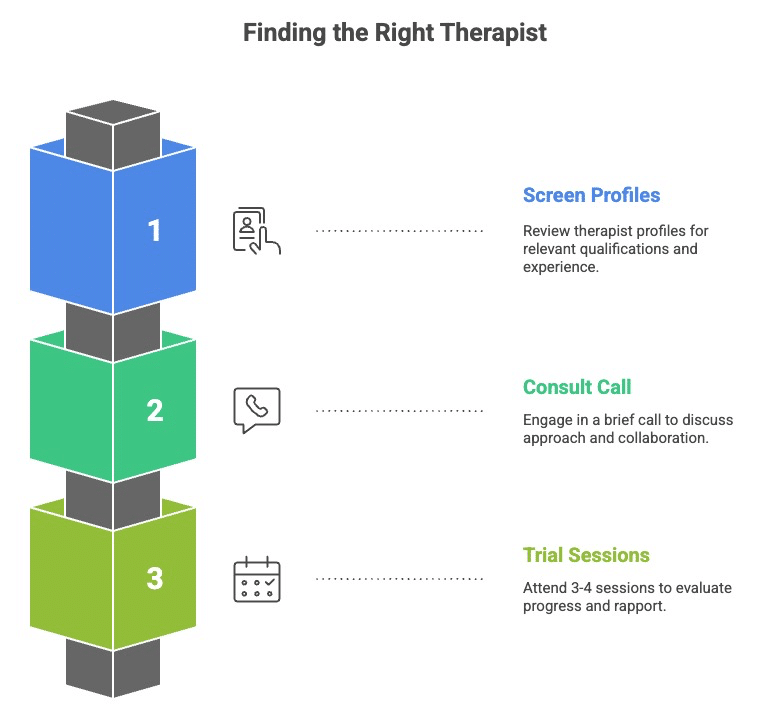
Use a brief, structured vetting process:
- Screen: review profiles for anxiety proficiency, populations served (adults, teens, couples), and languages.
- Consult: request a 10–15 minute call; ask about approach, outcome measures, and collaboration with primary care.
- Trial: commit to 3–4 sessions; evaluate progress, rapport, and homework follow-through.
Open Door Counseling Center in Clinton Township and Troy, Michigan offers evidence-based care and diverse clinicians aligned with these standards.
Care Options: In-Person, Telehealth, and Intensive Programs
Whether you prefer a calm office, your couch, or a focused reset, you can match anxiety care to your life and symptom severity.
In-person therapy offers structure, privacy, and real-time exposure or skills practice—ideal if you benefit from predictable routine, somatic observing, or fewer digital distractions.
Telehealth expands access across Metro Detroit, reducing travel barriers while maintaining evidence-based care like CBT, ACT, and mindfulness; it’s effective for mild to moderate anxiety and for caregivers with tight schedules.
When symptoms markedly impair work, school, or safety, consider intensive programs.
Intensive outpatient or partial hospitalization provides multiple sessions weekly, coordinated psychiatry, and measurable goals, using protocols for panic, OCD, or trauma-related anxiety.
You’ll gain rapid stabilization, relapse-prevention planning, and family involvement to strengthen support and accountability.
Getting Started: Local Resources, Insurance, and Next Steps
From your first call to your first session, getting started with anxiety care in Metro Detroit can be straightforward.
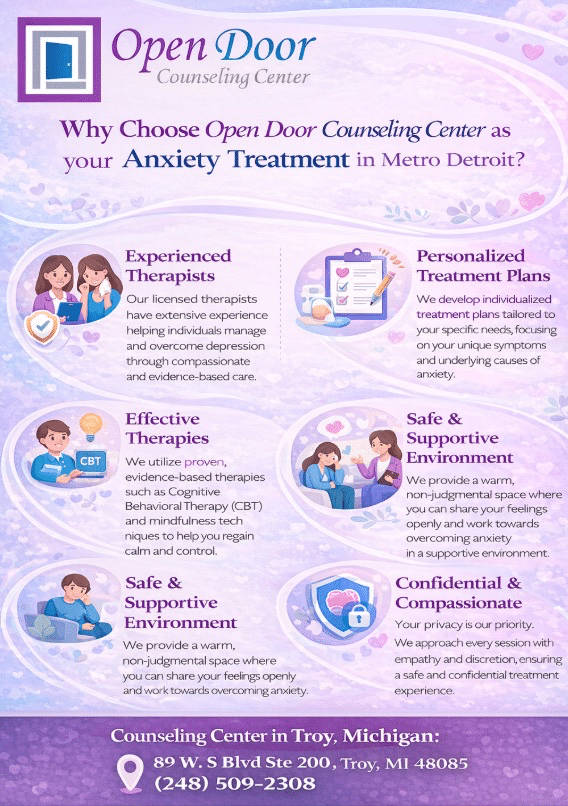
Begin by identifying local, evidence-based providers. Open Door Counseling Center offers CBT, trauma-informed care, couples therapy, and child/teen services, with evening and Saturday hours.
Ask about therapist specialties (e.g., anxiety, play therapy, Prepare & Enrich) and language or cultural fit.
Begin with local, evidence-based care: Open Door Counseling Center offers CBT, trauma-informed, couples, and child/teen services.
Verify insurance early. Call your plan for behavioral health benefits, in-network providers, telehealth coverage, copays, deductibles, and session limits. If out-of-network, request superbills and clarity on sliding scales.
Use a simple plan:
- Define needs and goals.
- Confirm insurance, fees, and availability.
- Schedule an intake; complete forms and screenings.
If safety concerns arise (e.g., suicidality), seek emergency or crisis services immediately.
You’re not alone, and you don’t have to guess your way forward.
Start by naming your goals, then choose evidence-based care: CBT and exposure, trauma-focused options when relevant, and medication if indicated.
Verify licensure and training, use brief consult calls to gauge fit, and track progress with tools like the GAD-7.
Consider reaching out to Open Door Counseling Center for support. Pick the format that fits—clinic, telehealth, or intensive support.
If safety is a concern, seek crisis help immediately. With the right plan, you can reduce anxiety and reclaim your life.
Schedule Your Free 20-minute Consultation Today with Open Door Counseling Center
Contact us today for your appointment request.
Clinton Twp (586) 203-2715 • Troy (248) 509-2308 • Text (586) 330-9415
Email Us HereRelated Searches: